
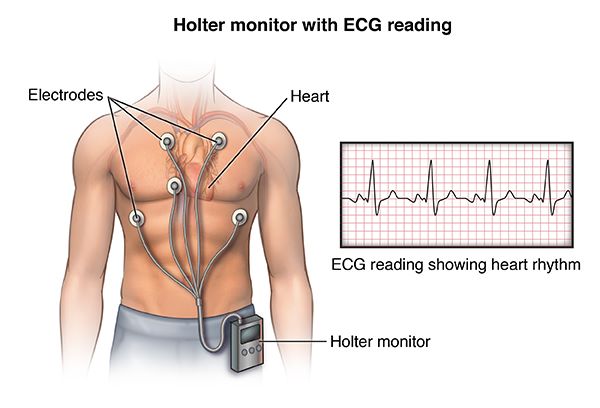
A Holter monitor is a small, wearable device that records the heart’s rhythm. It’s used to detect or determine the risk of irregular heartbeats (arrhythmias).
A Holter monitor test may be done if a traditional electrocardiogram (ECG or EKG) doesn’t provide enough details about the heart’s condition. If the irregular heartbeats are infrequent, a longer term monitor called an event recorder may be needed.
Some personal devices, such as smartwatches, offer electrocardiogram monitoring. Ask your health care provider if this is an option for you.
Why it’s done
A health care provider may recommend a Holter monitor if you have:
- Signs and symptoms of an irregular heart rhythm (arrhythmia)
- Unexplained fainting
- A heart condition that increases the risk of arrhythmias
Before you get a Holter monitor, you’ll have an electrocardiogram (ECG or EKG). An ECG is a quick and painless test that uses sensors (electrodes) taped to the chest to check the heart’s rhythm.
How the Test is Performed
Electrodes (small conducting patches) are stuck onto your chest. These are attached by wires to a small recording monitor. You carry the Holter monitor in a pocket or pouch worn around your neck or waist. The monitor runs on batteries.
While you wear the monitor, it records your heart’s electrical activity.
- Keep a diary of what activities you do while wearing the monitor, and how you feel.
- After 24 to 48 hours, you will return the monitor to your health care provider’s office.
- The provider will look at the records and see if there have been any abnormal heart rhythms.